Attic Mold Remediation in St. Petersburg, FL
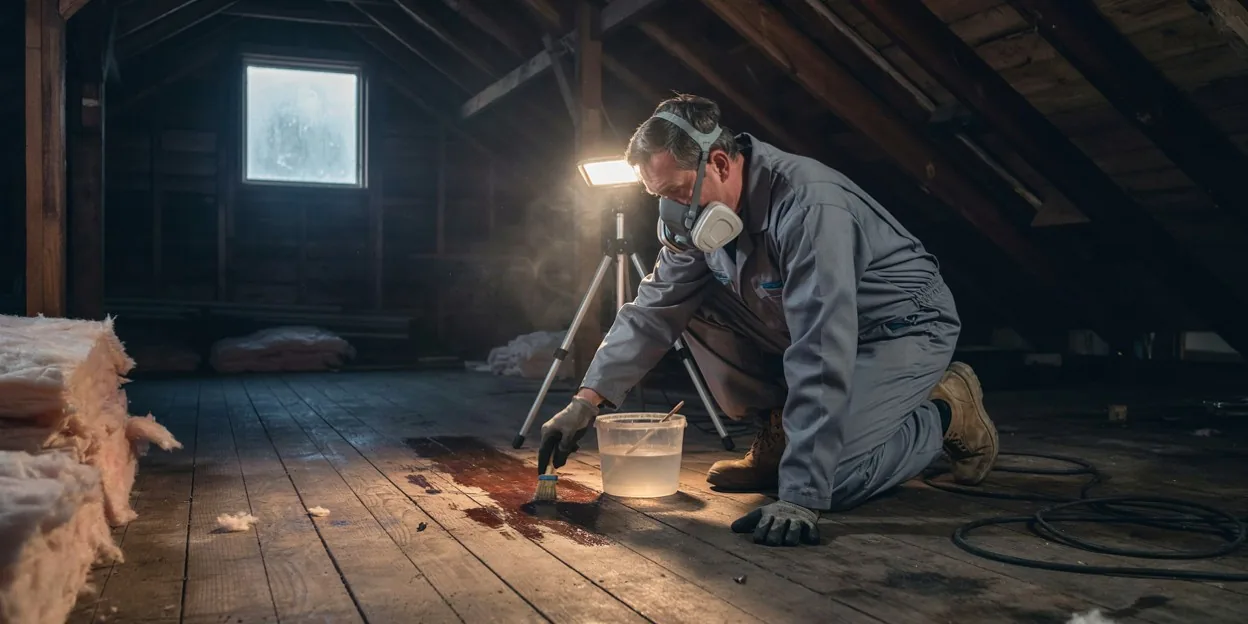
The roofer who came to replace the tabs Milton tore off shined a light into the attic and told you the underside of the plywood is streaked dark along the back slope. The insulation below it is matted and gray. This site connects you by phone with an independent local provider who does attic mold remediation in St. Petersburg and the rest of Pinellas County.
Decking, insulation, and the duct lying on the drywall
The crew goes up with a flashlight and a moisture meter and traces how far the staining runs along the decking and the rafters. They read the insulation below it and check whether the drywall ceiling under that spot is wet. Then they look for the cause: water coming through the roof, a flex duct with a torn jacket sweating onto the insulation, or a bathroom or dryer vent that ends in the attic instead of outside.
A low-slope section over a Florida room or a carport gets its own look. Those roofs hold water after a storm and find the seams, and the growth under them tends to run in a line along the low edge.
Shut the hatch and get the roof covered
Stay out of the attic. Walking the trusses and stirring the insulation is how people fall through ceilings and how dust ends up in the bedrooms. Close the hatch and leave it closed until the crew arrives.
If the roof is still open, get a tarp on it or get the roofer back out first. Walk the rooms below the stained area and look for ceiling spots or soft drywall. Check outside for a vent cap on the roof or in the soffit for every bathroom fan; if there is none, the fan is dumping into the attic.
Plywood cleaned, matted insulation bagged, soffits cleared
Roof decking and rafters are cleaned rather than replaced unless the wood is soft. The crew seals the hatch opening with plastic, runs a HEPA air scrubber in the attic, and HEPA vacuums the decking before treating it. Insulation under the stained area or under a leak comes out in bags. Flex duct with growth inside is replaced; rigid duct and the outside of a duct jacket can usually be cleaned.
Once the wood reads dry, the roofer finishes the repair, the vents get rerouted to the outside, and the soffits get cleared so the attic can move air again. If the staining has followed the ducts down into the air handler, see HVAC mold cleaning. If the ceiling drywall below is wet, that part is handled under mold removal, and putting it back is mold damage repair.
October 2024, shingle roofs, and the Pinellas attic in August
Hurricane Milton made landfall south of the county on October 9, 2024, and gusts of 80 to 100 mph crossed Pinellas that night, with 101 mph logged at Albert Whitted Airport in St. Petersburg. Shingle roofs on the 1950s and 1960s block ranches in Pinellas Park, Seminole, Largo, and south St. Pete lost tabs by the hundreds. Rain followed the same storm, and many attics took water that did not show on a ceiling until weeks later.
Even without a storm, a Pinellas attic in August runs far hotter than the cold air inside the ducts, so a duct with a torn jacket drips onto the insulation below it all summer. Florida licenses mold assessors and remediators separately under Chapter 468, Part XVI, and for growth over ten square feet the same company may not do both on one building within twelve months. Check the remediator at myfloridalicense.com. Roof damage from wind may fall under one part of the policy and mold under another, which is often capped; photograph both. Replacing decking or re-roofing needs a permit from the City of St. Petersburg, the beach town, or Pinellas County, and the roofer pulls it.
When you call about the streaked decking
Have the address ready, along with the roof type and age, whether the roof still leaks, and whether any ceilings below are stained. Say what the roofer or inspector told you. Call (727) 382-7755.