Black Mold Removal in St. Petersburg, FL
You opened the bedroom closet for the first time since the storm and there is a dark, almost black patch spreading across the ceiling under the attic hatch. Your first search online was frightening. The practical answer is calmer than that. This site connects you by phone with an independent local provider who does black mold removal in St. Petersburg and the rest of Pinellas County.
Why the color does not set the plan
Dark growth is a reason to act, not to panic. Nobody can name the species by looking at it, and the removal steps are the same whether the growth is black, green, or gray. What sets the scope is how far the water traveled and which materials it reached. The crew puts a moisture meter on the ceiling and the walls below it, climbs into the attic to read the decking and the insulation above the patch, and marks the wet area.
Then they decide what caused it: rain through a shingle Milton lifted, a sweating duct lying on the drywall, or a bathroom fan that dumps into the attic instead of outside. The remediation plan is written around that answer, and the patch itself is handled as part of it.
Stay out of the closet, and do not scrape it
Do not scrape, wipe, or sand the patch. Disturbing a dark patch with no containment is how the dust ends up in the hallway and the bedrooms. Close the closet door, move the clothes out if you can do it without brushing the ceiling, and leave the attic hatch shut.
Look at the room from the outside too. Check the ceiling in the hall and the next bedroom for staining, and press on them for softness. If the roof is still leaking, get a tarp on it or call a roofer first. Then call about the mold.
Ceiling and insulation out, framing cleaned
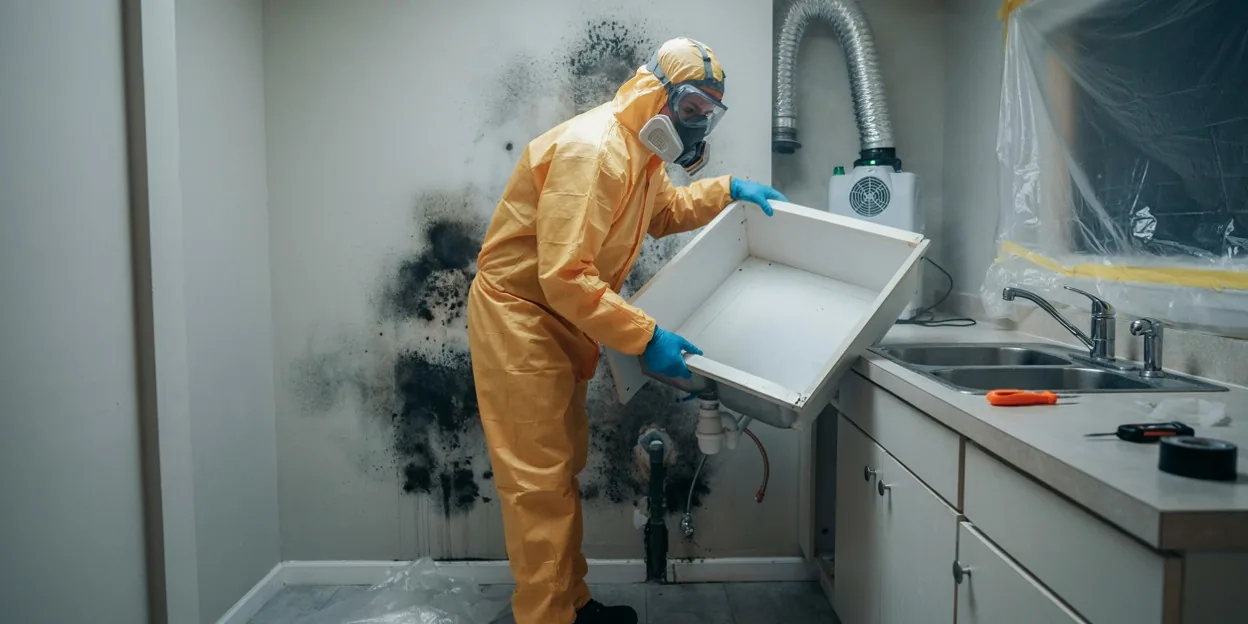
Inside the containment, the crew cuts out the wet ceiling drywall and bags the insulation that sat above it. Trusses and the underside of the roof decking get HEPA vacuumed and wiped; wood is cleaned, not replaced, unless it is soft. A HEPA air scrubber runs inside the sealed closet with the exhaust ducted outside, and the attic hatch is sealed off while they work.
Once the wood reads dry, the roofer fixes the leak or the AC tech reroutes the duct, and only then does the ceiling go back. If the dark patch follows the roof line across the whole attic, that is attic mold remediation. If the growth is in a bathroom, read bathroom mold removal. The rebuild of the ceiling and the closet trim is covered under mold damage repair.
Lifted shingles, Pinellas attics, and the twelve-month rule
Hurricane Milton came ashore on October 9, 2024, and Albert Whitted Airport in St. Petersburg logged a 101 mph gust. Shingle roofs across Pinellas Park, Largo, and the beaches lost tabs that night, and the leaks did not show up inside until the next heavy rain. In the 1950s block ranches that fill the county, the ceiling drywall is the first thing below the roof deck, so the dark patch in the closet is often the first sign of a roof problem.
Chapter 468, Part XVI of the Florida statutes splits mold work into two licenses, one for assessors and one for remediators. For growth larger than ten square feet, the company that assessed the house may not remediate it within twelve months. Check the remediator's license at myfloridalicense.com. Many Florida policies cap mold at a fixed amount, and the roof damage itself may fall under the wind portion of the policy; photograph both before anything moves. Replacing roof decking or wiring needs a permit from the City of St. Petersburg or from Pinellas County, pulled by the contractor who does that work.
When you call about the dark patch
Have the address ready, along with the size of the patch, what is above it, and whether the roof still leaks. Mention anyone in the house with asthma or breathing trouble so the crew plans containment with that in mind. Call (727) 382-7755.