Mold Removal in Palm Harbor, FL
Palm Harbor is an unincorporated community of about 60,000 people in the north of the county, stretching from the Gulf side at Ozona and Crystal Beach east across US 19 to Lake Tarpon. The housing is mostly 1980s and 1990s subdivisions of block and stucco houses, with older frame cottages in Ozona and downtown Palm Harbor and condo communities along US 19 and the lake.
The Gulf-side streets in Ozona and Crystal Beach took surge from Helene on September 26, 2024, and the rest of Palm Harbor took Milton's wind and rain on October 9. Inland, the typical mold call is not a storm at all: a 1990s house with a two-story attic full of flex duct that sweats in August, a master bath with a tiled shower and a weak fan, or an air handler in a garage that pulls damp air through the cabinet all summer.
Call us from Palm Harbor and we put you through to an independent local mold provider who reads the house with a meter before writing a scope.
Subdivision attics, Ozona cottages, and the Palm Harbor calls
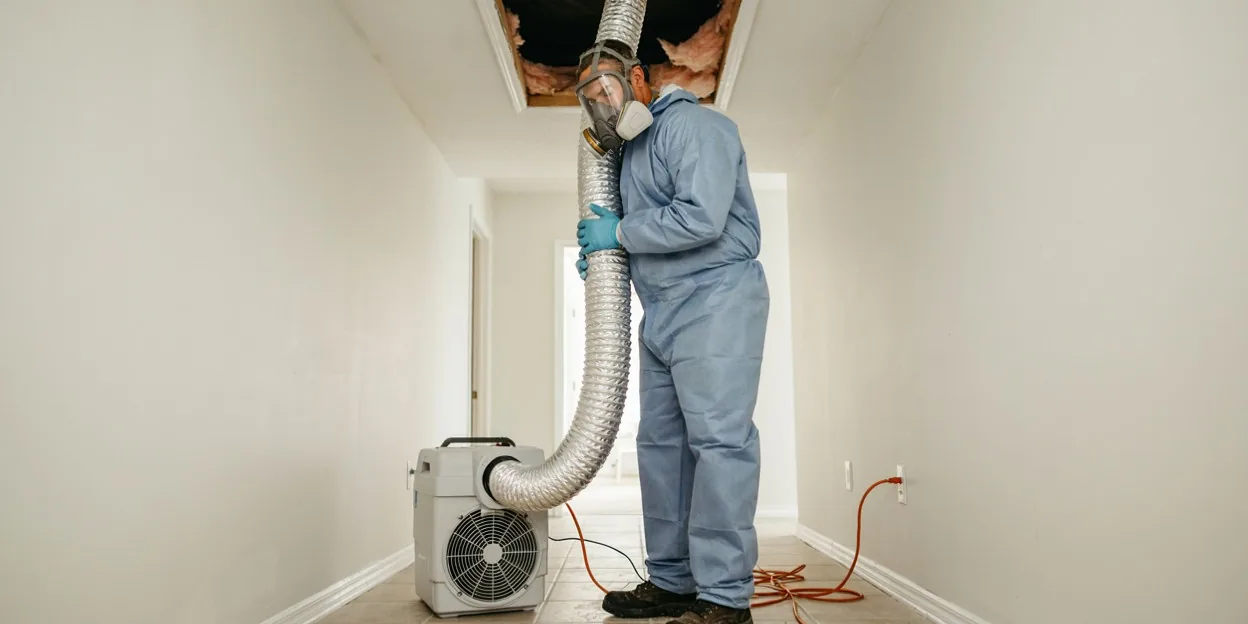
A 1990s two-story with growth around a sweating duct on the attic insulation is attic mold remediation, and the duct gets fixed as part of the scope. A master bathroom with speckles above the shower that return after cleaning is bathroom mold removal. A Gulf-side cottage in Ozona that took surge is mold removal handled wall by wall, with the crawl space read along with the walls.
County permits, county water, and the museum on Curlew Road
Palm Harbor is unincorporated, so building permits and inspections for a rebuild come from Pinellas County Building Services, and the provider who rebuilds pulls them. Water and sewer service here comes from Pinellas County Utilities, which is who to call when a supply line or a sewer lateral turns out to be the source. The Palm Harbor Museum in the historic Hartley House on Curlew Road keeps the record of the citrus and railroad years behind the older part of town.
Call (727) 382-7755 now and tell us what you see in your Palm Harbor home.
Services Available in Palm Harbor
Mold Removal
Growth on drywall after surge water, a supply-line leak, or a window that took sideways rain: room sealed, wet board cut at the meter line, framing cleaned and dried.
Black Mold Removal
A dark patch on a bedroom wall or closet ceiling handled by how far the water traveled, not by its color: containment, porous material out, leak fixed before closing.
Whole-Home Mold Remediation
A house that took Helene surge or sat shut for a season, mapped room by room, with every wet wall, cabinet, and floor handled as one project under one scope.
HVAC Mold Cleaning
Coil, drain pan, blower, and condensate line cleaned or replaced when the air handler in a St. Pete closet or garage sweats through a nine-month cooling season.
Bathroom Mold Removal
Growth behind a vanity, under a shower pan, or on a plaster ceiling with no fan in a 1920s bungalow bath, removed with the leak or the venting fixed first.
Attic Mold Remediation
Growth on roof decking under shingles Milton lifted, or around a sweating duct in a block ranch attic, cleaned once the roof and insulation are dealt with.
Mold Odor Removal
A musty smell in a house that looks fine, traced to the wet material under a floor, behind a cabinet, or inside a block wall, then removed and treated.
Mold Damage Repair
Drywall, baseboard, cabinet bottoms, and ceilings put back after removal, once the slab and framing read dry and the water source is repaired.